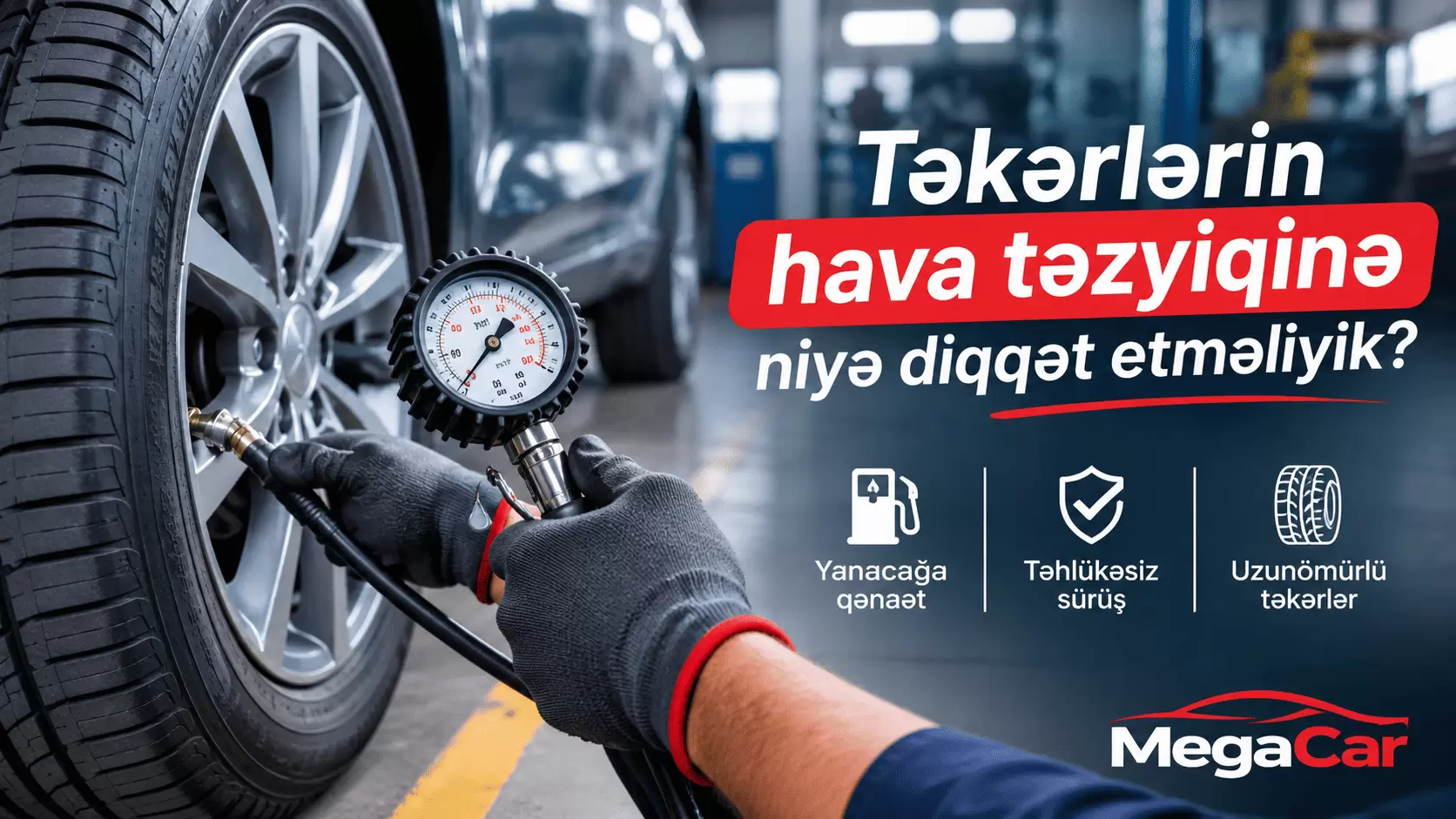
Has your car started consuming more fuel than before? Do you feel that steering has become heavier? Perhaps the reason is not as serious as you think. Sometimes, all of this is simply caused by low tire pressure. Many drivers check their tire pressure only when they notice a change in the vehicle's appearance or when a tire has visibly lost air. However, even a slight decrease in pressure can affect vehicle handling, fuel consumption, and tire lifespan.
How does low tire pressure increase fuel consumption?
When tire pressure decreases, the contact area with the road and rolling resistance increase. As a result, the engine has to use more power to move the vehicle. This can lead to increased fuel consumption. In other words, by monitoring tire pressure, you can not only save fuel but also protect your vehicle's technical condition.
5 main negative effects of low tire pressure
-
Increased fuel consumption: Driving with tires below the recommended pressure increases rolling resistance. This causes the engine to consume more energy.
-
Faster tire wear: Low pressure can lead to greater wear on the outer edges of the tires. As a result, tire lifespan is reduced.
-
Difficulty in vehicle handling: Reduced tire pressure can negatively affect steering response and vehicle stability when cornering.
-
Impact on braking distance: Incorrect tire pressure changes the contact characteristics with the road, which can affect the vehicle's behavior during braking.
-
Excessive tire heating: Driving long distances with low tire pressure causes greater tire deformation and heating. This increases the risk of tire damage.
What should the tire pressure be?
It is not possible to answer this question with the same figure for all vehicles. The recommended tire pressure depends on the vehicle's make, model, tire size, and load.
The correct pressure value can usually be found:
-
On the information label inside the driver's door;
-
On the fuel tank flap;
-
In the vehicle's owner's manual.
Important note: Do not confuse the maximum pressure indicated on the tire with the recommended pressure for your vehicle.
When should tire pressure be checked?
Experts recommend checking tire pressure at least once a month and before long journeys. Measurements should be taken when the tires are cold. For this purpose, the vehicle should remain stationary for at least 3 hours, or the measurement should be taken after a short drive at low speed.
It is also important to consider seasonal changes. When the air temperature decreases, tire pressure may also drop. Therefore, regular pressure checks are recommended, especially during the autumn and winter months.
What should you pay attention to when inflating tires?
When inflating tires, relying only on the compressor's reading is not enough. It is also important that the pressure gauge provides accurate and correct results.
When having your tires inflated at a service station, pay attention to the following points:
-
Make sure the pressure gauge on the inflation device is functioning properly and provides accurate readings.
-
If possible, ask the service staff whether the device has a calibration certificate or a document confirming its measurement accuracy.
-
Adjust the pressure according to the vehicle manufacturer's recommendations.
-
After inflation, it is useful to check the pressure again using a separate, reliable measuring device.
Please note that having a calibration certificate is not mandatory for every air compressor. However, checking the accuracy of the measuring device and monitoring its technical condition are important for ensuring the correct tire pressure.
Benefits of correct tire pressure:
-
Improves road grip and vehicle stability.
-
Helps prevent uneven and premature tire wear.
-
Contributes to optimized fuel consumption.
-
Makes vehicle behavior more reliable during braking and maneuvering.
-
Can extend tire lifespan.
MegaCar recommends!
Your vehicle's safety and economical operation begin with small details. Regularly checking tire pressure helps prevent additional fuel expenses and extend the lifespan of your tires. Remember, checking a few small details before setting off can protect you from bigger problems on the road.
MegaCar – care for your car, value for your comfort!